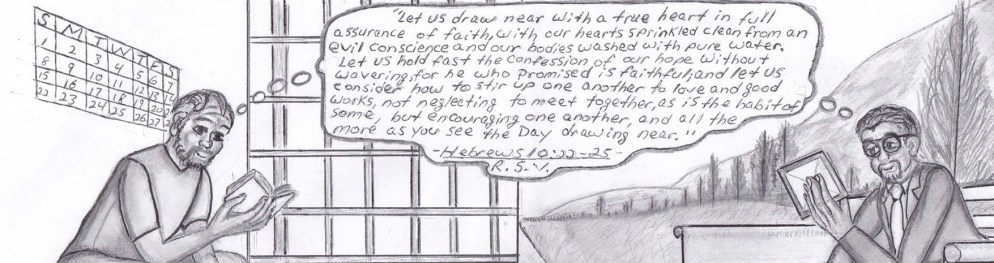
Before and After (Christmas Day)

Christmas Day

Hebrews 1:1-4 (5-12)

“Before and After”

by CM

Have you ever known a person who was stuck in the past? Everything they say is about, “The good old days.” People constantly caught up in nostalgia, pining for the comforts of yesterday, confusing “old-school” with “old-fashioned.” Just because an old pair of shoes is still comfortable doesn’t mean that they aren’t worn out and as with all things, change is inevitable.

Our text is written fro the benefit of those who have become comfortable with what was. People who are devoted to God in the context of a past deliverance. We have come to love the Lord and have a “testimony” to the truth of what God can do. We remember our former state, our particular sin, and in that deliverance we KNOW God; for it was through that experience that God spoke to use… in times past, our Before.

Our text illuminates the validity of a “before” experience. God spoke in time past through the prophets, but in these last days, he speaks through his son Jesus—the “After.” Many in the first century and up to this very day have a problem with the change that Jesus brought into the world. They were, and are, stuck in the before, but the real question is this. Does a person’s choice to be suck in the past equate to God remaining there too?

As we celebrate the birth of Jesus and acknowledge God’s transition in his means of communication from the old to the new, let’s open ourselves up to experience God work in our life in a new way. Let’s open ourselves up to a new “After” and be thankful for God’s “Before.”

The opening words of Psalm 98 read, “O sing to the LORD a new song.” In Jesus we have cause to. In all that we testify to, all of it is “before.” Move with an open willingness into the glorious “after” of what God wants to deliver you not just from, but to.

Saturday, Third Week in Advent

by Matthew B. Harper

Cast your burden on the Lord, and He will sustain you; He will never permit the righteous to be moved. (Psalm 55:22)

The stories that sustain us are the ones that remind us of a constant and loving presence. If you ask a child what the best thing about Christmas is, their response will certainly include the gifts of material things. But when you ask an adult, they will talk of wonderful family gatherings, of times spent together, of love that is celebrated and honored.

This verse from the psalms comes in the midst of words of trouble and persecution, of prayers that are begging for revenge and deliverance. In the midst of this heartfelt cry of pain and confusion, the psalmist is resting on the calm and certain assurance of God’s constant loving presence.

The Israelites, God’s chosen people, lived with years of turmoil, uncertainty, and fear. They did not understand why God delayed in delivering them from the persecution they suffered. We can look back and say that they were not yet ready for God, but in truth they were still not yet ready when Christ did come; and we are still not ready today. Christ comes in His time, and our worthiness is not required.

No matter how confused and hectic life gets, especially during the holidays, we know Christmas is coming. We know that Christ has come amongst us, and we celebrate that day of his birth. No matter our physical or emotional trouble, no matter our persecution or captivity, we have the same calm assurance that the psalmist had. Cast your cares upon the Lord, and God will sustain and deliver us.

What is the crying at Jordan? Who hears, O God, the prophecy? Dark is the season, dark our hearts and shut to mystery.

(Hymn 69)

Monday, Third Week in Advent

by Matthew B. Harper

Blessed is he who considers the poor! The Lord delivers him in the day of trouble; (Psalm 41:1)

Throughout the Bible there is a clear preference given to those who are poor. In all human economic situations it is unfortunately true that some will have more, and some less. God gives us strong words to remember those who have less, and to get up and go do something about it.

I have a hard time with that. Prison teaches you to be selfish, (in case you didn’t already know how.) We have so very little in here, and we learn to guard our possessions and our emotions, to build a wall around our past histories and our future dreams. I fear when I think about myself as I grow older. What will I be like when I am free? Will I ever be able open up enough to find the true intimacy of a deep relationship? For years I lied about my crimes, and that betrayal prevented the deep intimacy that my fiancé and I longed for in each other. There is no room for deception in a loving relationship.

Christ comes into our lives to tear down our walls. When we invite God into our lives, we slowly become more open to inviting others in as well. We learn to yield to the impulse not just to be giving of our things, but also to be giving of our time, our energy, and our love. We learn to become vulnerable.

Christmas is a time when we often stop to reach out in ministry, or at least to write a check to a charity. But the Bible does not let us off the hook so lightly. Giving and serving is a lifelong part of a Christian life, to always be giving in our things, and more importantly, to be giving of ourselves. We are all spiritually and emotionally poor.

O heavenly word, eternal light, begotten of the Father’s might, who in these latter days wast born for blessing to a world forlorn; (Hymn 64)

Third Sunday in Advent

by Matthew B. Harper

Stir up thy power, O Lord, and with great might come among us; and, …let thy bountiful grace and mercy speedily help and deliver us; through Jesus Christ our Lord…”(160)

The above prayer comes from the Episcopal Book of Common Prayer. It is a common yearning that we find in the Scriptures, and in the liturgy. We are praying to be delivered, and that the delivery might come speedily! Oh how often we forget the words of the 23rd Psalm. David reminds us that our delivery comes through the valleys, not from them. And it seems somehow unfair to read the 23rd psalm without first reading the 22nd, whose powerful words of painful longing were spoken by Christ on the cross.

I love the Psalms. Every human emotion can be found there. If we are bold enough to read all of the psalms, and not just the pretty ones used in most churches, then we can be surprised. The full breadth of the Psalter shows more of our humanness than it does our holiness. And in my life I can be disappointingly human. I can be petty and angry, I can be depressed and lonely, I can even be lustful and covetous; I am only human. Often the prison atmosphere seems to intensify our worst and least attractive traits.

But Jesus didn’t come to give us a life suddenly free of all suffering, or free from all hardships. Jesus did come to endure them with us, to bring us comfort, to direct our gaze again towards the eternal God, and to bring hope. God’s incarnation into flesh shows us not a freedom from life, but a new and joyful existence in this very life. Jesus comes to us, to be with us, and to guide us into this new existence in God. That’s what Christmas is all about.

Come, O Father saving Son, who o’er sin the victory won. Boundless shall your kingdom be; grant that we it’s glories see. (Hymn 54)

Saturday, Second Week in Advent

by Matthew B. Harper

O Lord my God, I cried to thee for help, and thou hast healed me. (Psalm 30:2)

There is great pain in the Hebrew Bible, in the laments, in the prophets, and in the psalms. Throughout all of the pain is a sure confidence in the deliverance of the Lord. But not all of our hopes will be realized on this side of heaven. That is a true and painful reality. Yet we live in hope. We cannot give up on hope because it is not enough just to survive.

In prison you cannot even try to do God’s work preaching a message of mere survival and morality. We must preach, teach, live, and show forth hope. And this hope cannot simply be an empty hope of freedom or material things. The hope that guides us and gives direction is a hope that comes only through, and from, God.

I daydream of blue waters and open seas, but even more I daydream of living my life over again, living it better. And it is a painful truth I must live with that my crimes can never be undone; they can never be satisfied; there will never be complete healing, and I may never see freedom. I have watched too many men in here die, old and forgotten, to be able to deny that possible reality.

But the hope endures. Hope has been called the most dangerous thing in prison, and it is. It is also the most liberating.

In God all our hopes and dreams will find fulfillment

No eye has known the sight, no ear has heard such delight: Alleluia! Therefore we sing to greet our king; forever let our praises ring. (Hymn 61)