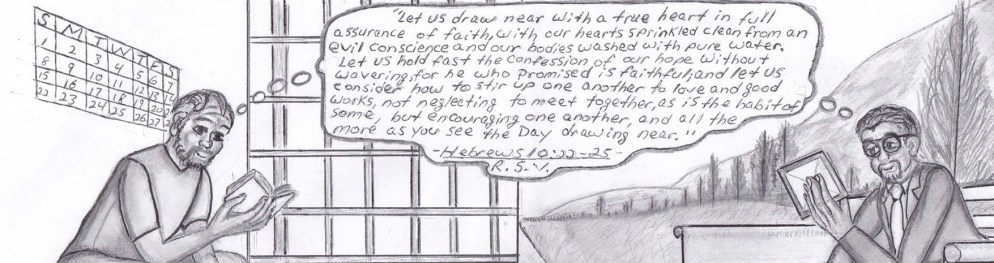
Manger Maker (Christmas Eve)

Christmas Eve – December 24th

Luke 2:1-14 (15-20)

“Manger Maker”

by CM

The Nativity story has always held a special place in my heart. It’s a scene in which the most glorious of all existence enters the turmoil of a chaotic creation. And in the duration of time that encompasses this event, peace and joy enfold all of space, all of time, and it’s all because of a baby named Jesus who was wrapped in swaddling clothes and laid in a manger.

There is a host of individuals who helped make this moment possible, each on divinely situated to play an important and specific role to bring about God’s designed purpose. Of course, we have Mary, whom we all call blessed. There’s Joseph, Mary’s husband, and descendant of the House of David. Caesar Augustus, for only an Emperor could issue a decree to all the world that would compel Joseph to make the trip to Bethlehem. We need a historical reference point to narrow down the period of time, so we have the governor of Syria, Quirinius. We have the shepherds in the field to bear witness to the event, the angel, and the host of heaven to praise and worship. All of the these people are identified so we’ll have contextual depth and texture for this story. But there’s one more person, one whose touch is so important that without him we’d have a totally different accounting of this story. Can you identify him?

The fact that Joseph and Mary were turned away from the inn shows that they didn’t have the manger on their minds when Mary’s time to deliver came. That means that the manger just so happened to be there, or was it really that much of a coincidence? Someone built it, someone gathered the materials and used his skills to construct the place where Jesus would be born, where the shepherds would find him, and a place where, in an imperfect world, perfect timing and placement were demonstrated by an unnamed craftsman, whose importance was so vital that God personally commissioned him to do so.

Some of you who may be tempted to esteem your value, your importance, your vital presence and dynamic contributions as being less significant than those of the “named” stars of the show. Consider the world into which Jesus was born and the first place he found prepared for him. Did the “Manger Maker” know the significance of his work project at the onset of his undertaking? Probably not. But God did. And while we don’t know that craftsman’s name, God does. And in that example, recognize the fact that your own worth is measured by your faithful dedication to perform and the fact that God knows your name.

For it is in such, I believe, that we find a long list of names. Names of a silent majority who make sure God’s projects come to pass, a list whom Jesus will personally greet with a warm embrace and add the words, “Well done, my good and faithful servant.”A simple, yet profound, “Thank you.”

Christmas Eve

by Matthew B. Harper

He saw that there was no man, and wondered that there was no one to intervene; Then His own arm brought Him victory, and His righteousness upheld Him. (Isaiah 59:16)

Tonight is the calm in the storm. The presents are wrapped, the food is put aside, the traveling is over, and tomorrow is Christmas. Tonight is the night for celebration, for worship, and for community.

I love stuff. On the street I was a guy with lots of tools, lots of clothes, bookcases full, and a kitchen overflowing. I didn’t just love stuff, I loved my stuff. The world seemed to be teaching me that what I owned was the measure of my life, and I listened with both ears.

I’m in prison now, and most of my things have been long given away to friends and family, passed on to those people who can use them. But some of the things are being kept and stored by my family, and that is important to me. It is a type of promise to me, a promise that there will again come a Christmas when I can celebrate at home.

In prison I am not sustained by stuff, or by the memories of something I used to have. I am ministered to, sustained by, and loved by my family. The people that I love, if they are family of my birth or family of my choice, are the most precious things in my life.

Because the real measure of our lives is not the stuff, it is the people that are in it. The measure of our life is not what we have, it is how we love. I miss some of my stuff, (a favorite sweatshirt, a great CD, my bed) but I would not trade the full measure of everything that I own for one single of my friends.

After all, it is only stuff – and this is about love.

Once in royal David’s city stood a lowly cattle shed, where a mother laid her baby in a manger for His bed: Mary was that mother mild, Jesus Christ her little child – (Hymn 102)

Wednesday, Fourth Week in Advent

by Matthew B. Harper

And Mary said, “My soul magnifies the Lord, and my spirit rejoices in God my Savior…” (Luke 1:46-47)

In any household with children Christmas morning comes as a wonderful love filled chaos. There are cries of delight and joy, piles of wrapping paper, and new toys and clothes strewn about everywhere. The rest of the joyous day is often barely controlled chaos as the kids put on new clothes, and are then constantly underfoot with their new toys. Fingers are sticky with special foods, and there is tinsel and ribbons to endlessly clean up.

But then, after hours of chaos, quiet begins to come. Family members sated on rich food find a comfortable place to sit, and those children that have been a source of wonderful terror find a quiet place, on a warm lap, and rest. The gifts are put aside for a while, and the gift givers are loved and honored.

After all these years in prison I am not often very different. I look forward to Christmas when I often receive gifts of money to buy special books, magazine subscriptions, and CDs. I often love my ‘toys’ in here much more than I should. But the greatest time comes, and the greatest gift is, when friends and family come to visit. When they give of themselves to come through the barbed wire, and behind the fences, to sit and be with me.

In all the gifts that God has given us, I do not believe there is any greater divine longing than for those quiet moments together. That quiet time when we put aside all the trappings of creation, and simply sit and dwell with the creator. When we put aside our toys, and sit upon the lap of our heavenly parent.

O come, the key of David, come, and open wide our heavenly home; make safe the way that leads on high, and close the path of misery. Rejoice! Rejoice! Emmanuel shall come to thee, O Israel! (Hymn 56)

Tuesday, Fourth Week in Advent

by Matthew B. Harper

For with God nothing will be impossible. (Luke 1:37)

In prison the population divides itself. We divide into cliques, groups, gangs, and mobs. You have your associates, your ‘stick-men,’ your ‘running buddies,’ and occasionally a friend. We divide by race, by religion, by geography, by sports, and even by politics. In a community designed to dehumanize you we define ourselves not to create a community, but to destroy it; not to include people, but to exclude them.

An old cell mate of mine was a young white man, and a bit of a racist. He ranted one day about how all the different religious groups were only masks for racism. One by one he went through the groups listing perceived faults, until he came to the Christian community. He paused for a while, and then grudgingly conceded that in the church here there were members from every group, every race, every culture, and every background worshipping together. Maybe we ‘had something going’ he said; maybe we were different.

Christ comes into our midst and welcomes us. Christ welcomes us All. Christ overcomes every barrier, and loves us beyond any fault or shortcoming. I know it because I see it, I feel it, I experience it.

Community. In a men’s maximum-security prison, Community. With Christ all things are possible.

O come, thou branch of Jesse’s tree, free them from Satan’s tyranny that trust thy mighty power to save, and give them victory o’er the grave. Rejoice! Rejoice! Emmanuel shall come to thee, O Israel! (Hymn 56)

Monday, Fourth Week in Advent

by Matthew B. Harper

But the angel said to him, “Do not be afraid, Zechariah, for your prayer is heard, and your wife Elizabeth will bear you a son, and you shall call his name John. And you will have joy and gladness, and many will rejoice at his birth.” (Luke 1:13,14)

Have you ever noticed how often a messenger of God starts with the words “be not afraid”? How majestic and terrible it must be, how amazing and wonderful.

God has spoken to us, and continues to speak to us. Often the words of God come through the living word of the Bible, sometimes through the prayers and collects of the liturgy, and sometimes they come into the quiet stillness of our hearts. I love the liturgy that has been handed down to us; it contains years and years of beautiful prayers and services. But the liturgy can also become a mindless recitation of empty words. It is important, at such times, to again grow quiet. To listen quietly to our hearts, and to ask how we might reconnect with God.

Often the hardest words to receive are the ones that come through other believers. But when we share our needs and prayer concerns, sometimes it is in community that we feel the presence of God and hear the guiding and comforting words that bring divine joy.

As a child in Bible studies I learned that prayer is talking to God; as an adult I have learned that just as much, prayer is listening to God.

O come, O come thou Lord of might, who to thy tribes on Sinai’s height in ancient times didst give the law, in cloud and majesty and awe. Rejoice! Rejoice! Emmanuel shall come to thee, O Israel! (Hymn 56)


Fourth Sunday in Advent

by Matthew B. Harper

For God sent the Son into the world, not to condemn the world, but that the world might be saved through Him. (John 3:17)

All too often when people think of Christians, they think of condemnation. They picture a God who comes to condemn them and the world. We are all sinners, and in prison the reality of our crimes and wrongdoings is ever present to us. We are living in punishment, we are expecting condemnation, and we condemn ourselves. But what we never expect is the radical love of Christ.

In all of His earthly ministry Jesus never condemns people for being lost, sinful, or broken. The harsh words that Jesus does speak are reserved for those who abuse and misuse their positions as ministers and priests. God speaks only words of love and invitation to His children. The Bible is handed down to us as a great gift, not a weapon to use on each other.

Many of us in here have been abused and condemned by Christians. Instead of seeing examples of Christ’s loving presence, we have only seen examples of human weakness and animosity. This is not the Gospel message.

God loves us so much, in our sinfulness and brokenness, that he sends his son to us to invite us back into a relationship with Him. Christ’s birth was foretold, and so was Christ’s death on Golgotha. God gave His son to us, knowing we would reject and kill Him. This is how much God loves us.

Dare we love each other as much?

Dare we not.

O come, thou wisdom from on high, who orderest all things mightily; to us the path of knowledge show, and teach us in her ways to go. Rejoice! Rejoice! Emmanuel shall come to thee, O Israel! (Hymn 56)

Saturday, Third Week in Advent

by Matthew B. Harper

Cast your burden on the Lord, and He will sustain you; He will never permit the righteous to be moved. (Psalm 55:22)

The stories that sustain us are the ones that remind us of a constant and loving presence. If you ask a child what the best thing about Christmas is, their response will certainly include the gifts of material things. But when you ask an adult, they will talk of wonderful family gatherings, of times spent together, of love that is celebrated and honored.

This verse from the psalms comes in the midst of words of trouble and persecution, of prayers that are begging for revenge and deliverance. In the midst of this heartfelt cry of pain and confusion, the psalmist is resting on the calm and certain assurance of God’s constant loving presence.

The Israelites, God’s chosen people, lived with years of turmoil, uncertainty, and fear. They did not understand why God delayed in delivering them from the persecution they suffered. We can look back and say that they were not yet ready for God, but in truth they were still not yet ready when Christ did come; and we are still not ready today. Christ comes in His time, and our worthiness is not required.

No matter how confused and hectic life gets, especially during the holidays, we know Christmas is coming. We know that Christ has come amongst us, and we celebrate that day of his birth. No matter our physical or emotional trouble, no matter our persecution or captivity, we have the same calm assurance that the psalmist had. Cast your cares upon the Lord, and God will sustain and deliver us.

What is the crying at Jordan? Who hears, O God, the prophecy? Dark is the season, dark our hearts and shut to mystery.

(Hymn 69)

Friday, Third Week in Advent

by Matthew B. Harper

For it will be as when a man going on a journey called his servants and entrusted to them his property; to one he gave five talents, to another two, to another one, to each according to his abilities. (Matthew 25:14,15)

How many of us are afraid or feel unworthy? How many of us have felt this way at one time or another? How many of us do not step out, speak up, sing louder, or laugh more – all because we fear our own self-worth in the eyes of another? The simple truth is that we have not been given the same talents, or in the same measure, and that is a difficult and sometimes painful thing.

But being faithful to God does not mean having more talents, it is about using what you have been given to the best of your ability in the ways that God has shown you to use them. All too often we feel like the one who got the last and least talent, and we just want to go and bury it somewhere and not show it to anybody. But the master did not judge his servants by how many talents they had, only by what they had done with them.

If you have ever received a hand made gift from a small child, then you know something of the master’s feelings. Children cannot craft, write, or draw things with great skill, only with great love and total abandon. And we receive them and cherish them because they are indeed precious. They offer whatever talent they have in faithful love to us. So should we offer to our Father.

This Christmas I dare to step out more, and dare to do your best with what you have been given, whatever that may be. I promise it will be enough.

At your great name, O Jesus, now all knees must bend, all hearts must bow: all things on earth with one accord, like those in heaven, shall call you Lord. (Hymn 60)

Thursday, Third Week in Advent

by Matthew B. Harper

Then all those maidens rose and trimmed their lamps…Watch therefore, for you know neither the day nor the hour. (Matthew 25:7,13)

Throughout the Gospel Jesus often likens the Kingdom of God to a lamp burning in the darkness. He calls it a lamp and a light, but as a child I knew it as a candle.

On Christmas Eve the church services would often end in darkness. The choir would light a candle, and the light would spread. The flame would be passed through the congregation, and the light would grow and spread more. If a candle was blown out by a chance gust, it was quickly relit from another candle in the community. In the deepest darkness of a cold winter night the warm glow of light would encompass the church as the voices sang a beautiful and old hymn. Christ was here, Christmas was here, and the celebrations could begin.

It is dark at night in the desert. Away from the city and the community the night becomes heavy and oppressive. St. John of the cross described his desert experiences as the ‘dark night of the soul.’ Prison is just such a darkness for me, and we all have darkness like this in our lives.

Into all of this darkness comes the light of Christ. The kingdom burns brightly with a light that cannot be put out, only spread. As the community grows in faith and joy the light glows brighter. The light always defeats the darkness. Always.

Even in prison it is a holy night.

Silent night, holy night, all is calm, all is bright. Round yon virgin, mother and Child! Holy infant so tender and mild, sleep in heavenly peace, sleep in heavenly peace. (Hymn 73)

Wednesday, Third Week in Advent

by Matthew B. Harper

Blessed is that servant whom his master when he comes will find so doing. Truly, I say to you, he will set him over all his possessions. (Matthew 24:46-47)

Every year that I was with the Canterbury Ministry at James Madison University, we went Christmas caroling. Every year here at Greensville the church goes to sing Christmas carols in the Medical unit. Working with my mother for our Cursillo community we helped bake cookies for prisoners going on a Kairos retreat. Now I am in prison, and I enjoy eating theses homemade cookies, cooked with love and ministry.

For many of us, when God calls us to an assigned task, we do not like it. God, as our master, calls us out of our comfort zone, calls us to use talents we don’t think we have, and to do things that the world might not understand or praise. Read again the story of Moses, or of Jonah, or of Paul. When we yield to the calling of our Lord, then we find we have talents that we didn’t know we had. We discover a fulfillment greater than what the world can give.

I always try to do the work of the Lord. I try to do those tasks that my God has set me to. I often do them badly, and I often find myself, and my work, blessed.

Caroling and cookies. In prison and out. Same work, different place. Same master, same God, same Lord.

What is God calling you to do today?

There’s a voice in the wilderness crying, a call from the ways untrod: “prepare in the desert a highway, a highway for our God. (Hymn 75)